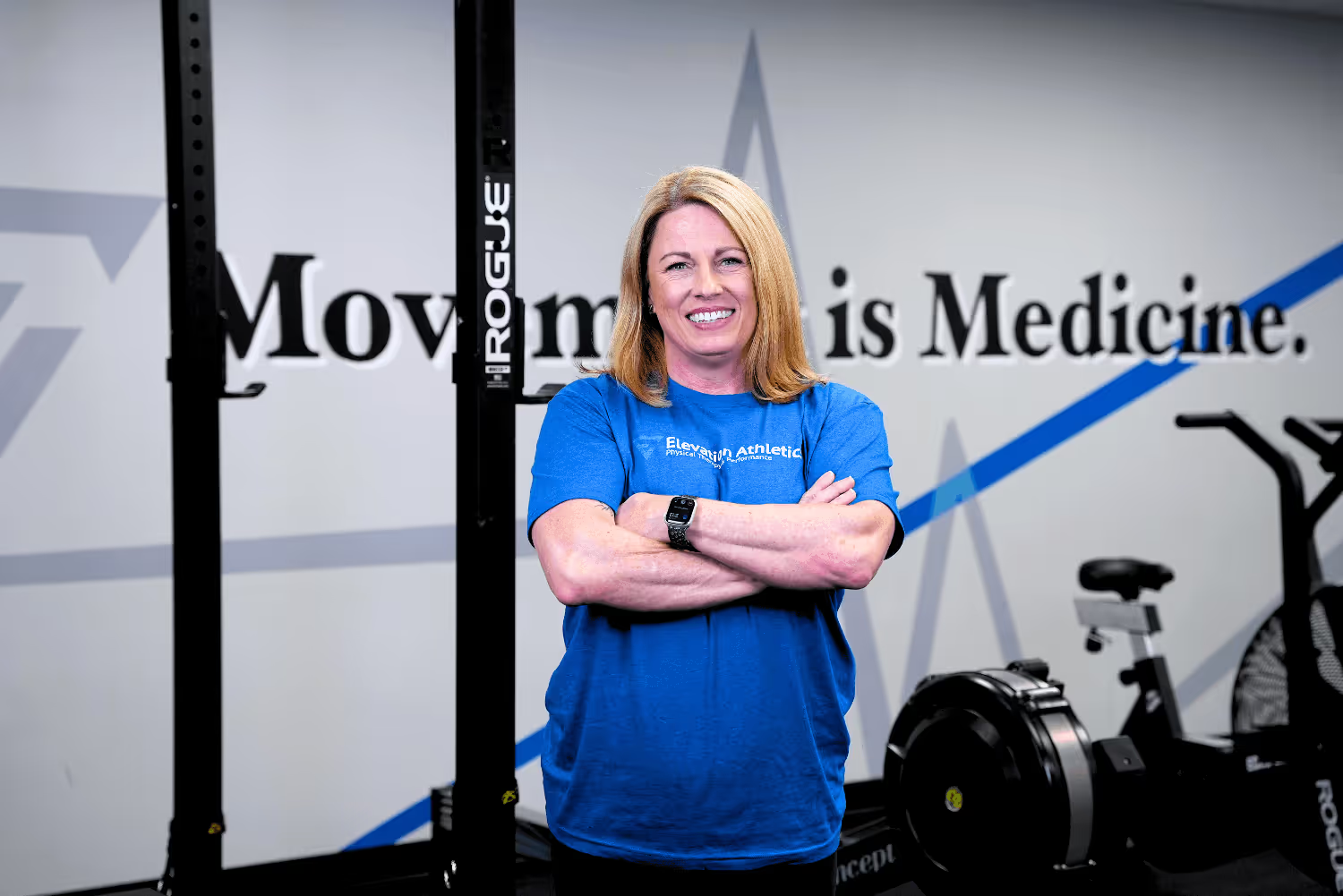
If you are an athlete or an active adult in Fort Worth, there is nothing more frustrating than being sidelined. Whether it is a shoulder pinch during an overhead press or a nagging knee pain that flares up on a run, your first question is usually: how long until I can get back to training?
True recovery is about more than making the pain disappear. At Elevation Athletics Physical Therapy & Performance, the focus is on shifting the mindset from a quick fix to a long-term performance strategy. While every person heals differently, understanding what shapes your timeline can help you set realistic expectations and get back to training with confidence.
Factors That Influence Your Recovery Timeline
How quickly you see results from physical therapy depends on several variables. No two athletes heal at the same rate, but these factors consistently play the biggest roles.
- Severity of injury: A minor muscle strain may resolve in a few weeks, while a significant ligament tear or a chronic, long-standing condition will naturally require more time to stabilize and strengthen.
- Consistency and adherence: Physical therapy is a partnership. Progress relies heavily on attending scheduled sessions and committing to the movements and drills prescribed for you to perform outside the clinic.
- Type of treatment: Passive modalities alone rarely prepare an athlete for the real demands of sport. Performance-based rehab that incorporates functional movement, strength equipment, and sport-specific progressions tends to accelerate the transition back to full training.
- Individual factors: Age, sleep quality, nutrition, and stress levels all influence how efficiently your tissues repair themselves.
.webp)
Typical Physical Therapy Timelines for Common Injuries
The timelines below are general estimates. They are meant to provide a roadmap, not a guarantee, since individual circumstances always vary.
Soft Tissue Injuries: Strains and Sprains
For most muscle strains or ankle sprains, significant recovery typically occurs within 4 to 8 weeks. You may feel pain-free sooner, but the tissue needs this window to regain the structural integrity required for high-intensity training or sport.
Tendon Injuries: Tendinopathy
Tendons such as the Achilles or rotator cuff have a lower blood supply than muscle, which means they heal more slowly. Initial improvement often takes 8 to 12 weeks, and building true tendon resilience through dedicated loading can take 3 to 6 months. Conditions like Achilles tendinopathy, tennis elbow, and rotator cuff pain all fall into this category.
Joint Pain: Knee and Hip Conditions
Conditions such as runner's knee, hip impingement, and IT band syndrome often show meaningful improvement within 6 to 10 weeks. Because these issues are frequently tied to movement mechanics, ongoing performance work is essential to prevent recurrence once training volume increases. A movement screen or return-to-sport testing can help identify the underlying contributors before they become a recurring problem.
Lower Back and Spine Pain
Low back pain and sciatica vary widely depending on the root cause. Acute episodes often respond well within 4 to 8 weeks of targeted manual therapy and therapeutic exercise. Chronic or recurring spine pain may require a longer commitment to address movement habits and build the foundational strength needed to stay out of pain.
Why the "Wait and See" Approach Fails Athletes
Many athletes try to tough it out, hoping that rest alone will solve the problem. This strategy usually backfires. When pain is ignored, the body naturally develops compensatory movement patterns. A hip issue left unaddressed can quietly shift load to the lower back or knee, turning one problem into two.
Ignoring an acute injury often allows it to become a chronic condition. By the time you seek help, the recovery timeline is longer because those compensations must be corrected before the original problem can even be addressed. Early intervention is consistently the fastest path back to the gym.
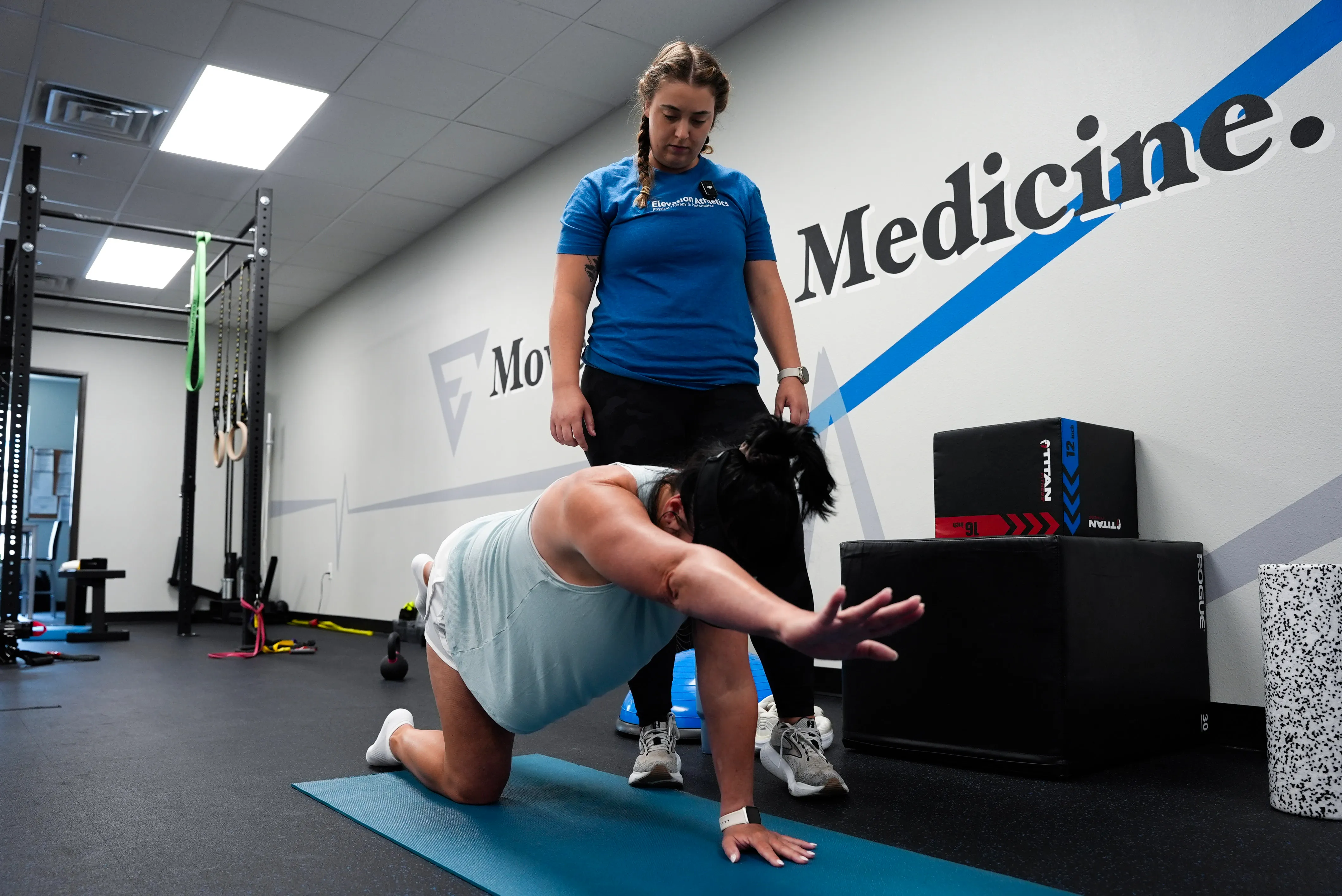
Performance-Driven Recovery at Elevation Athletics Physical Therapy & Performance
At Elevation Athletics Physical Therapy & Performance, the standard PT model is not the model. Athletes in Fort Worth, TX who train for CrossFit, running, or general performance need a rehab experience that matches the demands of their sport.
Here is what that looks like in practice:
- One-on-one sessions: Every minute of your session is spent with a Doctor of Physical Therapy. No handoffs, no techs, and no divided attention.
- Performance-based rehab: Real strength equipment is used throughout the rehab process so that your recovery mirrors your training environment.
- Comprehensive treatment options: Depending on your injury and goals, care may include dry needling, manual therapy, blood flow restriction (BFR) training, neuromuscular re-education, plyometrics and return-to-sport progressions, and therapeutic exercise.
- Return-to-sport and return-to-running focus: The goal is not just to be pain-free. It is to return stronger, with the movement quality and capacity to perform at your best and reduce the risk of re-injury.
Whether you are dealing with a hamstring strain, shoulder impingement, plantar fasciitis, or a post-surgery recovery, the approach is built around your specific goals and your sport.
Start Your Recovery Now
Every day spent waiting without a plan is another day not moving toward your goals. A minor setback does not have to become a long-term limitation.
At Elevation Athletics Physical Therapy & Performance, athletes are treated by clinicians who understand the demands of training and will not simply tell you to stop. The focus is on building a plan that keeps you moving while addressing the root cause of your pain.